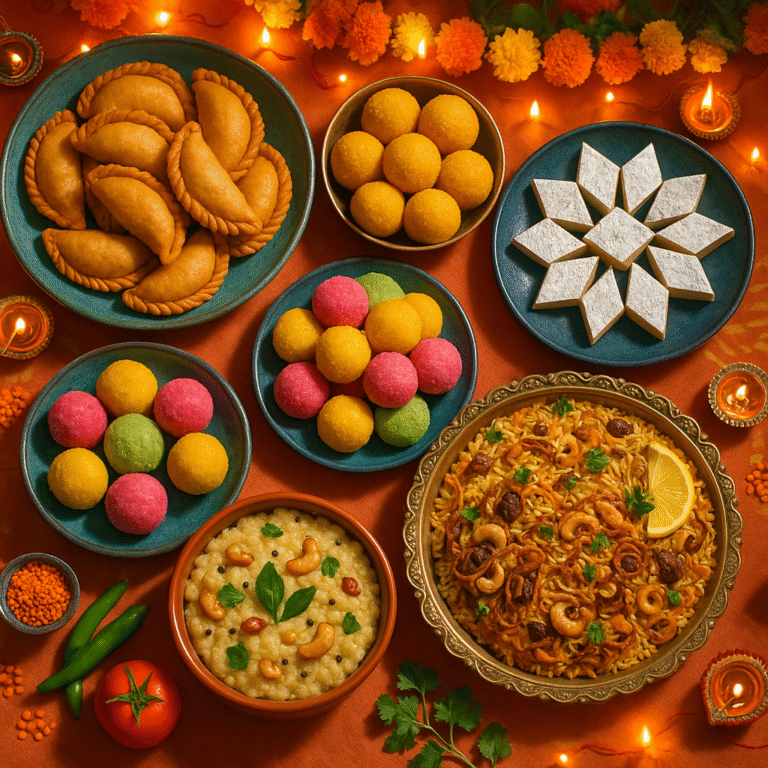
India is a land of vibrant festivals and rich culinary traditions, where every season brings with it a unique celebration marked by special menus and cherished rituals, festive indian feasts. From the colorful revelry of Holi to the luminous joy of Diwali, from the spiritual reflection of Eid to the harvest celebrations like Pongal and Baisakhi, Indian festivals offer a dazzling palette of flavors, aromas, and stories that invite families and communities to come together in joy and gratitude.
This blog is a heartfelt journey through India’s festive calendar—a fusion of tradition and innovation that reimagines beloved recipes while honoring their stories and symbolism. Alongside classic recipes for key festivals, this guide encourages families to cook together, share memories, and even participate in festival recipe competitions that uplift community spirit. Read on to explore how to celebrate India’s seasons with special menus that transform every festival into an unforgettable feast.
The Heart of Festive Indian Feast Food: Tradition Meets Innovation
Festivals across India are deeply intertwined with culinary customs passed down through generations. Each dish tells a story or embodies a blessing—sweetness for prosperity, spices for warmth, and colors for joy. Yet with evolving tastes and global influences, Indian festive cuisine is also embracing innovation: lighter versions of treats, fusion dishes, and creative presentations that appeal to today’s food lovers while preserving ritual significance.
Celebrating India’s festival menus is about keeping heritage alive in ways that resonate in modern kitchens. It’s a shared language where grandmothers’ hand-rolled sweets meet contemporary plating styles, and sacred spices mingle with novel recipes shaped by local and global inspirations.
Diwali: The Festival of Lights and Sweet Blessings
Symbolism and Story:
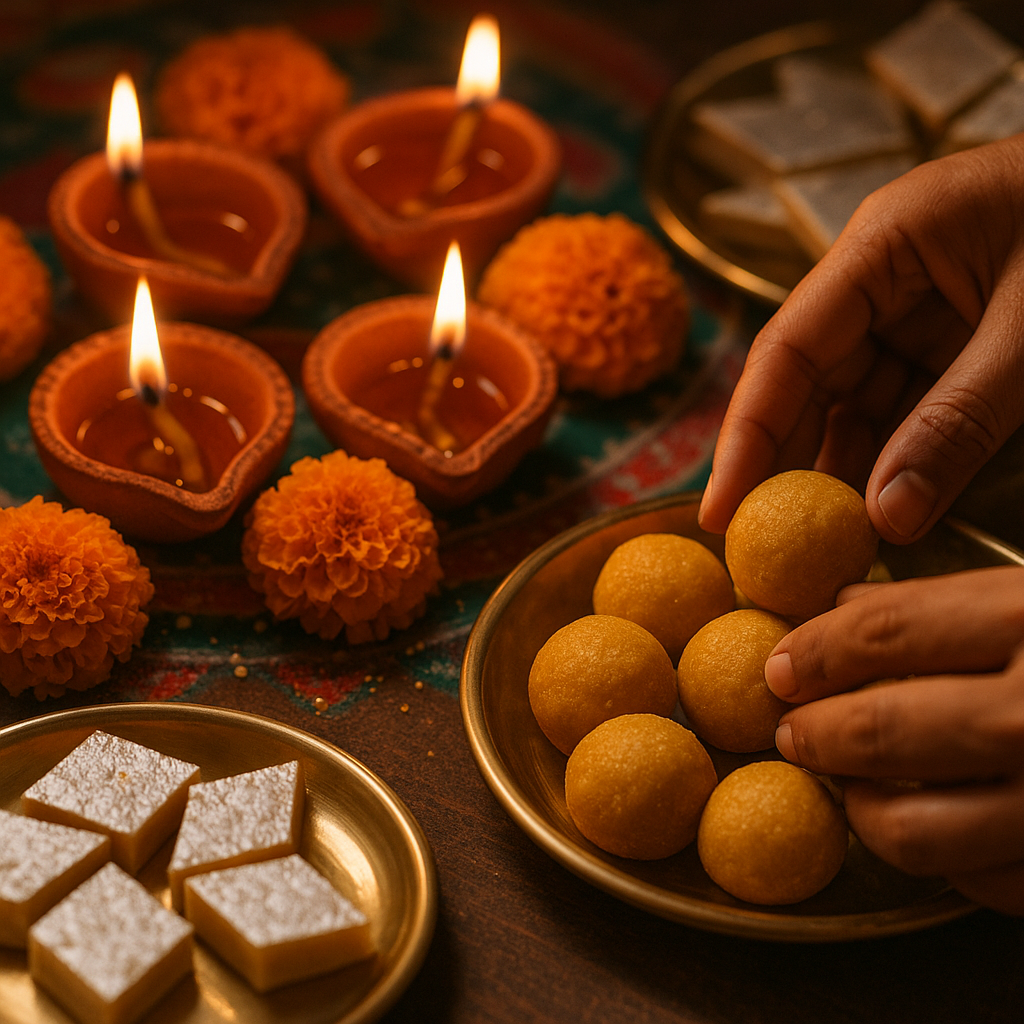
Diwali, the festival of lights, symbolizes the triumph of light over darkness and good over evil. Often celebrated with rows of lamps (diyas) and colorful rangoli designs, Diwali also brings a bounty of sweets and savory snacks to the table. Sharing food with loved ones and neighbors expresses joy and goodwill.
Traditional Recipes:
- Ladoo varieties such as Besan Ladoo and Boondi Ladoo – golden, round sweets that symbolize wholeness and well-being.
- Kaju Katli – cashew fudge that signifies richness and prosperity.
- Chakli and Namak Pare – crunchy savory snacks for festive nibbling.
Innovative Ideas:
- Low sugar or vegan ladoos made with jaggery and nuts.
- Fusion bites like chocolate kaju katli or baked chakli.
- Elegant plated samplers combining sweet and savory.
Family Involvement:
Invite children to help shape ladoos and decorate platters. Host a Diwali snack assembly party where every member creates their version of namak pare or chakli, adding personalized twists.
Holi: The Festival of Colors and Flavors
Symbolism and Story:
Holi marks the arrival of spring and the victory of good over evil, celebrated by tossing colorful powders and sharing hearty foods. The vibrant festival calls for equally bold flavors, refreshing sweets, and dishes to cleanse and energize.
Traditional Recipes:
- Gujiya – sweet dumplings filled with khoya and dry fruits symbolizing sweetness and auspiciousness.
- Thandai – iced milk drink spiced with nuts, fennel, and rose petals for refreshment and vitality.
- Puran Poli – lentil-stuffed flatbreads emphasizing abundance.
Innovative Ideas:
- Healthy baked or air-fried gujiyas with quinoa or oats fillings.
- Alcohol-infused thandai cocktails for adult celebrations.
- Vegan puran poli with coconut jaggery filling.
Family Involvement:
Organize Holi baking sessions where kids help roll and stuff gujiyas. Prepare colorful thandai stations for everyone to mix their favorite versions.
Eid: A Feast of Generosity and Unity
Symbolism and Story:
Eid signifies gratitude and generosity after Ramadan’s fasting month, uniting families and communities. The festive tables overflow with rich, aromatic dishes symbolizing prosperity and sharing.
Traditional Recipes:
- Biryani – fragrant spiced rice layered with tender meat or vegetables.
- Sheer Khurma – a creamy vermicelli pudding signifying sweetness and fulfillment.
- Kebabs and Samosas – savory starters with complex spice blends.
Innovative Ideas:
- Vegetable or tofu biryani for plant-based feasts.
- Lightened sheer khurma with almond milk and less sugar.
- Fusion kebabs using global marinades alongside traditional spices.
Family Involvement:
Host an Eid feast preparation day with family helping marinate meat, roll kebabs, and garnish biryanis. Share recipes and stories passed down, creating a festive cooking ritual.
Seasonal Celebrations: Pongal, Baisakhi & More
Beyond the major festivals lie harvest festivals like Pongal (Tamil Nadu) and Baisakhi (Punjab), celebrating nature’s bounty with meals rich in symbolism.
Pongal: Rice and moong dal cooked with jaggery, cardamom, and ghee, epitomizing thankfulness for the harvest. Children can help decorate the traditional clay pot where Pongal is cooked.
Baisakhi: Feast includes makki di roti (corn flatbread) and sarson ka saag (mustard greens), marking the agrarian culture. Family members can prepare roti together using traditional methods.
Tips on Involving the Whole Family in Festive Preparations
- Plan and Divide Tasks: Assign age-appropriate kitchen roles—kids can wash veggies or sprinkle spices while adults handle stove work.
- Story Sharing: Encourage elders to share festival stories as cooking progresses to connect recipes with culture.
- Decoration and Presentation: Let everyone join in food arranging and table decoration for creative expression.
- Host Friendly Competitions: Introduce festival recipe challenges where relatives or friends prepare a dish, share photos online, and vote for favorites—building excitement and community.
Final Thoughts
India’s festivals are a treasure chest of culinary delights, each dish steeped in history, symbolism, and love. By blending tradition with innovation and fostering family involvement, every festive menu becomes not just a meal but a celebration of culture, togetherness, and creativity.
So this season, light up your kitchen and your hearts by bringing these special festive feasts to your table. Share your experiences, recipes, and family stories—because food is the sweetest tie that binds us all.