Introduction: Why Spice Storage Matters
Every home cook knows spices are the soul of a great kitchen—transforming everyday ingredients into flavor-packed masterpieces. But even the best cumin, coriander, or turmeric can lose their magic without proper storage. Ensuring your spices stay fresh, aromatic, and potent is both a culinary and economic must. This guide offers practical, creative, and science-backed kitchen hacks to help you store spices for maximum freshness, along with easy DIY spice organization ideas.
How Spices Lose Their Freshness
Spices are dried seeds, fruits, roots, and barks loaded with sensitive natural oils and compounds that give them flavor and aroma. They lose potency through:
- Exposure to light: Fades color and breaks down essential oils.
- Exposure to heat: Accelerates evaporation of aromatic compounds.
- Exposure to air: Speeds oxidation; robs spices of aroma and flavor.
- Humidity: Encourages clumping and can cause mold.
Optimal storage means protecting your spices from these “enemies.” The result? Healthier, tastier, longer-lasting seasonings.
The Science of Spice Freshness
Ideal Conditions for Maximum Flavor
- Cool Temperature: Spices last longer when kept where temperatures rarely exceed 21°C (70°F).
- Darkness: Store away from direct sunlight; UV rays degrade volatile oils and pigment.
- Low Humidity: Aim for a dry cupboard or drawer—avoid places near stovetops, dishwashers, or windows.
- Air Tightness: Oxygen is the enemy; always use tightly sealing lids.
- Minimal Handling: Use clean, dry spoons—not wet fingers!
Shelf Life Guidelines
- Whole Spices: Last 2–4 years if stored well (think: peppercorns, cloves, cardamom pods)
- Ground Spices: Best used within 6–12 months for peak flavor (like chili, ground cumin)
- Blends: Use within 3–6 months. Homemade blends last longer if kept airtight in cool, dark places.
Kitchen Hacks for Spice Storage & Organization
1. Glass Over Plastic: Upgrade Your Containers
- Glass (preferably dark/amber glass) protects against both light and air, unlike most plastic.
- Recycle glass jars or buy uniform sets for a tidy, professional look.
- Avoid metal, which can heat up quickly and may impart flavors.
2. Label Everything—With Dates
- Use a label maker, masking tape, or ready-printed labels.
- Always include the spice name and purchase/expiry date.
- For blends, list major ingredients to avoid mystery jars later.
3. Store in Drawers or Cabinets
- Spices last longest away from light and heat—drawers or closed cupboards are perfect.
- Use tiered shelf organizers, pull-out racks, or drawer inserts for maximum visibility and accessibility.
4. Group by Frequency or Cuisine
- Group Indian masalas in one box, Italian herbs in another, baking spices in a third.
- Saves time and cuts mess during meal prep—just grab the set you need.
5. Use Magnetic Spice Jars or Wall Racks
- Attach magnetic jars to the fridge or mount on a kitchen wall for easy access and a modern look.
- Great for small kitchens—frees up drawer and shelf space.
6. Vertical Storage: Door-Mounted & Pull-Out Racks
- Install slim racks on the inside of cabinet doors or custom pull-out vertical organizers.
- Perfect for renters and maximize “dead” space.
7. Bulk Storage: Separate “Refill” from Daily Use
- Buy whole spices in bulk but keep a small, fresh quantity in small jars for daily use.
- Store surplus in airtight containers in the back of your pantry.
8. Beat Clumping: Add Rice Grains or Silica Packs
- Drop a few uncooked rice grains or a food-safe silica gel packet in jars to absorb moisture and prevent clumps.
9. Repurpose & Upcycle
- Reuse pill bottles (well-cleaned) for tiny quantities of saffron, star anise, or dried chilies.
- Vintage tins or tea tins make charming spice containers.
10. Arrange Alphabetically or By Use
- Alphabetical order makes everything easy to find.
- Keep most-used spices toward the front and less-used ones farther back.
DIY Spice Storage Solutions
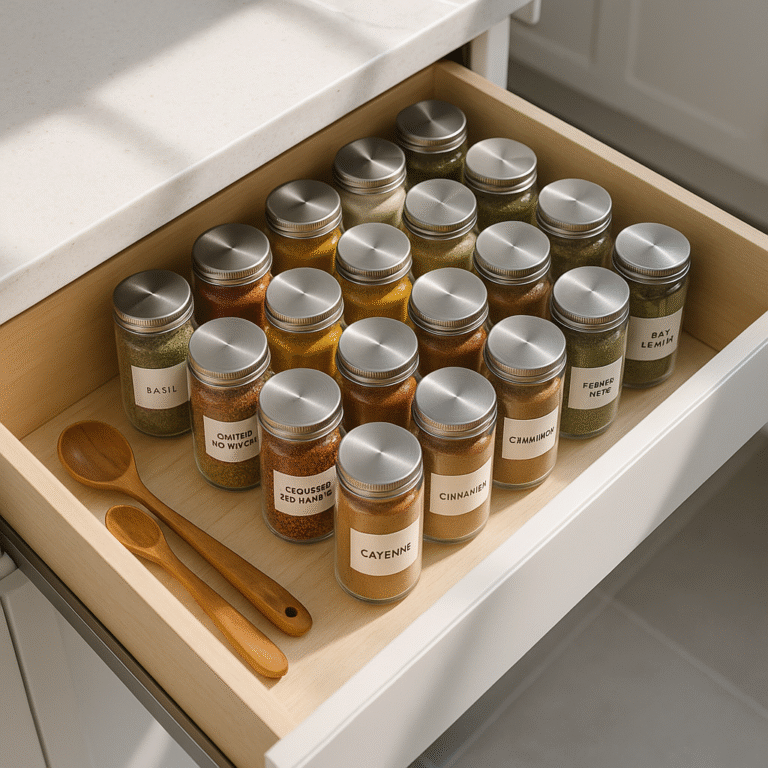
Build a Custom Spice Drawer
- Purchase ready-made spice drawer inserts or repurpose utensil trays.
- Lay jars flat with labels facing up for ultimate visibility.
- Add non-slip liners for extra grip.
Install a Kitchen “Spice Library”
- Vertical wall racks turn your spices into art—both functional and attractive.
- Use uniform small bottles for a clean look.
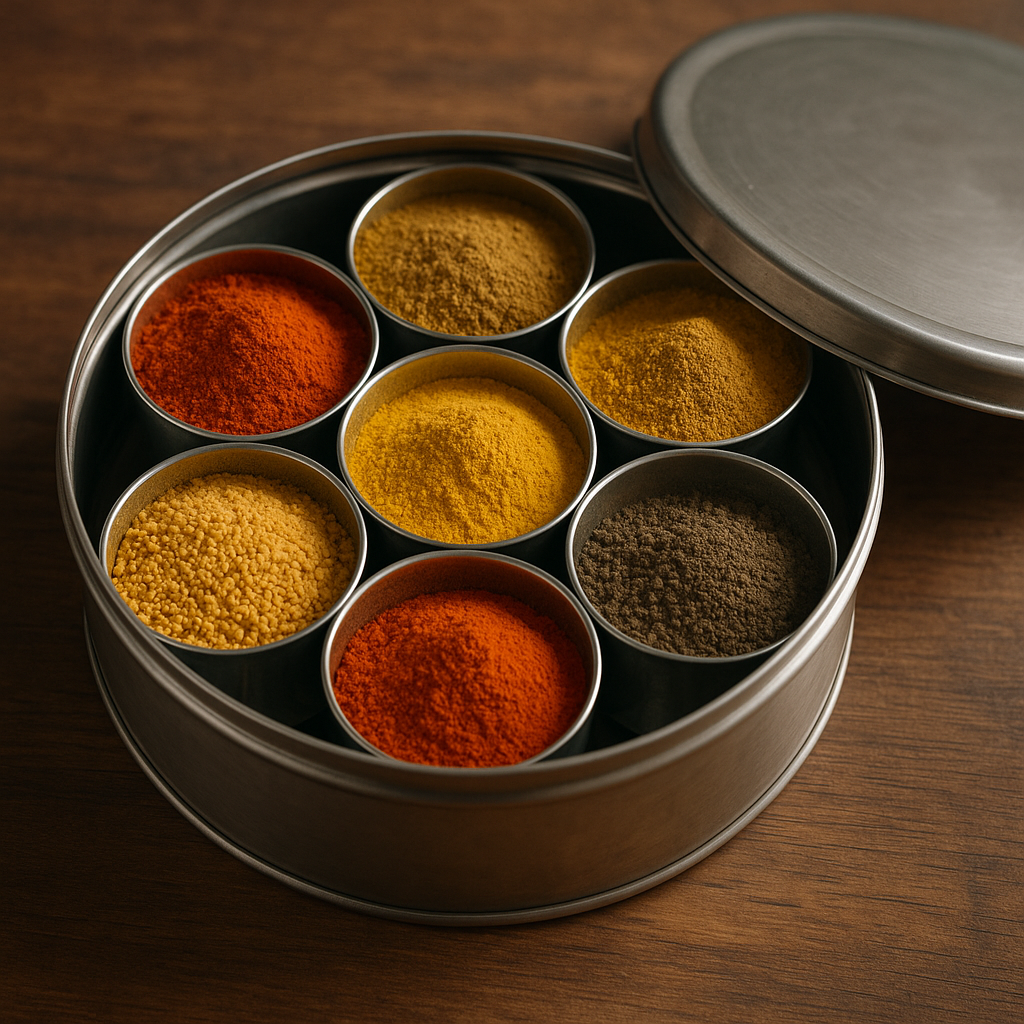
Portable Spice Box (“Masala Dabba”)
- Traditional Indian round boxes with mini metal containers.
- Perfect to carry most-used spices to the stove for easy access.
Travel Spice Kits
- Use pill organizers for camping or travel cooking—a fresh, DIY solution for adventurous cooks!
Spice Storage Myths & Mistakes to Avoid
Mistake 1 – Storing Over the Stove
- Heat and humidity from cooking degrade spices quickly.
Mistake 2 – Using Shakers over Pots
- Steam from hot pans can enter jars during shaking. Always use a spoon for measuring and avoid contamination.
Mistake 3 – Big Batches of Ground Spices
- Grinding too much at once boosts convenience but reduces longevity. Grind small amounts as needed for peak flavor.
Mistake 4 – Ignoring Expiration Dates
- Don’t rely on how “fresh” a spice smells—write or set reminders for regular clean-outs.
Spice Storage for Different Kitchen Spaces
Small Kitchens
- Opt for wall-mounted racks, tiered shelves, or magnetic jars.
- Use portable trays or baskets that can be tucked away when not in use.
Large Kitchens
- Custom pull-out spice cabinets, deep drawers, and countertop carousel (“lazy Susan”) organizers.
- Decant spices into uniform jars for a Pinterest-worthy wall.
Shared Kitchens
- Keep spices in portable caddies or storage baskets organized by type or user.
Extending Spice Life – When to Toss & When to Refresh
- Whole spices: Crack or toast in a pan; if aroma has faded, replace.
- Ground spices: Color should be vibrant; if dull and faint-smelling, toss and refill.
- Test tip: Rub a pinch between fingers—spices should feel powdery and intensely fragrant.
Recipe Ideas to Use Up Old Spices
- Simmer old spices in stocks, broths, or brines for subtle flavor.
- Make spice blends to use leftovers before buying new.
- Use old whole spices as simmering potpourri with citrus peels for fragrance.
Conclusion – Fresh Spices, Better Cooking
Proper spice storage transforms your cooking. These kitchen hacks and DIY ideas keep spices fresher longer—making every meal tastier and your kitchen more efficient. Try these tips and enjoy better-flavored dishes every time.
FAQs
Can I refrigerate or freeze spices?
Not recommended for daily use. Moisture changes cause clumping and loss of strength. Freeze only bulk whole spices in airtight bags if you live where humidity is very high.
How often should I clean my spice drawer or rack?
Wipe containers and refresh liners every 3–6 months.
Are superfood spices stored differently?
No—keep them cool, dry, dark, and airtight like all spices.
Is it safe to use expired spices?
They are safe but weak in flavor. Use quickly or compost.